Code of Conduct Against the Sexual Exploitation of Children and Adolescents
This Code of Conduct aims to establish principles and commitments to prevent and combat the sexual exploitation of children and adolescents (ESNNA) in travel and tourism, promoting respect for and protection of their rights.
Statement of Principles
- We reject the sexual exploitation of children and adolescents in Peru and worldwide, particularly in connection with travel and tourism, as it violates their fundamental rights and is contrary to the principles of responsible tourism.
- We condemn any action that uses tourism activities, facilities, or services to promote, facilitate, or tolerate the sexual exploitation of children and adolescents.
- We commit to reporting to the competent authorities any situation or indication of sexual exploitation of children and adolescents that comes to our attention.
This code guides the conduct of those involved in providing tourism services and promotes the protection of children and adolescents from sexual exploitation and trafficking for sexual exploitation associated with travel and tourism.
Prevention and Protection Commitments
- Maintain an ethical policy rejecting all forms of sexual exploitation of children and adolescents in the context of travel and tourism.
- Inform and train staff on preventing ESNNA, identifying situations of risk, and following procedures for reporting these incidents to the competent authorities.
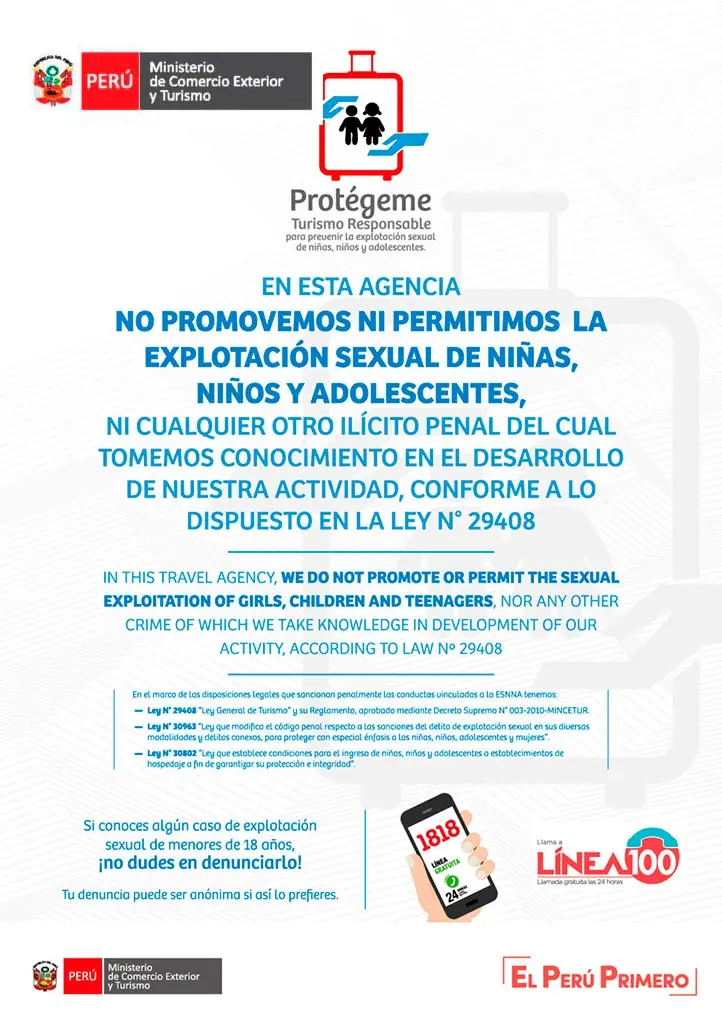
- Share messages and display visible notices informing travelers, customers, and suppliers of our rejection of the sexual exploitation of children and adolescents.
- Encourage suppliers and partners to adopt responsible practices that help protect children and adolescents.
- Include a clause rejecting the sexual exploitation of children and adolescents in contracts with tourism service providers, such as the following: “Tourism promotes childhood and adolescence free from sexual exploitation. The parties reject and commit not to promote, facilitate, or tolerate any act that contributes to the sexual exploitation of children and adolescents”.
Protecting children and adolescents is a shared responsibility. Responsible tourism must help create safe environments that respect their rights.